Not every expat living in Thailand needs to file a Thai tax return. And even if you are required to file, you may have little or no Thai tax to pay.
These are two separate questions:
Do I need to file a Thai tax return?
and:
Do I have any Thai tax to pay?
For most expats, whether you need to file depends on four main things:
- How many days you spend in Thailand
- Whether you have income arising in Thailand
- Whether you have foreign source income that falls within the Thai tax rules
- Whether your assessable income exceeds the relevant filing threshold
This guide explains how those rules work, which tax return may apply and what to do next if you think you need to file.
Want a Quick Answer?
Use our Thai Tax Return Filing Checker for a practical step by step route.
The checker takes you through the main questions and includes short video guidance to help you work out whether you are likely to need to file and what to do next.
The checker is updated for each filing season. You can also continue below for a fuller explanation of the rules.
Do All Expats in Thailand Need to File a Tax Return?
No.
Living in Thailand, holding a Thai visa or having money in a Thai bank account does not automatically mean that you need to file a Thai tax return.
You may need to file if, for example, you:
- Work or run a business in Thailand
- Receive rental or other income arising in Thailand
- Were Thai tax resident when relevant foreign source income was earned and later bring that income into Thailand
- Have assessable income above the filing threshold that applies to you
A useful starting point is your Thai tax residence.
Step 1: Are You a Thai Tax Resident?
For Thai personal income tax purposes, you are generally treated as a tax resident if you spend 180 days or more in Thailand during a calendar year.
The days do not need to be consecutive. It is the total number of days spent in Thailand during the year that matters.
Many expats expect the test to be 183 days, but Thailand’s domestic residence test is 180 days. The 183 day figure appears in international tax treaties and other countries’ tax systems, but it should not be substituted for Thailand’s domestic residence rule.
If you spend fewer than 180 days in Thailand, you will normally be treated as a non resident for Thai personal income tax purposes.
However, being non resident does not automatically mean that you have no Thai tax obligations. A non resident can still be taxable on income arising from Thailand.
For more detail, see our guide to Thailand tax residency rules.
Step 2: Do You Have Income from Thailand?
Thai source income can be relevant whether you are resident or non resident.
Examples can include:
- Salary or other income for work carried out in Thailand
- Business or professional income arising from activities in Thailand
- Rental income from property in Thailand
- Income connected with property or assets situated in Thailand
An important point for expats is that where the money is paid does not necessarily determine where the income arises.
For example, if you physically perform your work in Thailand but your overseas employer pays your salary into a bank account in another country, the fact that the money never enters a Thai bank account does not automatically make it foreign source income.
Thai law taxes relevant income from employment or business carried on in Thailand whether the payment is made inside or outside Thailand.
This can be particularly important for remote workers, company directors, consultants and people working from Thailand for an overseas business.
Step 3: Do You Have Foreign Source Income?
Foreign source income requires a different analysis. Under current Revenue Department guidance on foreign source income, income earned from 1 January 2024 onwards can become assessable in Thailand where:
- You were a Thai tax resident in the year in which the foreign source income was earned
- That income is subsequently remitted into Thailand
The remittance can take place in the same year or in a later year.
This means the year in which the income was earned matters.
If you were not Thai tax resident in the year in which the foreign source income arose, that income does not become assessable under this particular remittance rule simply because you later bring it into Thailand.
Our guide to assessable foreign sourced income in Thailand explains the foreign income and remittance rules in more detail.
What if You Are Non Resident When You Remit the Money?
Under the Revenue Department’s current guidance, the key residence test is whether you were Thai tax resident in the year the foreign income was earned.
If you were Thai tax resident in that year and later bring the income into Thailand, the Revenue Department’s guidance indicates that it should be included in the Thai tax calculation for the year of remittance.
This treatment is relatively new and there is still limited practical experience of cases where a person’s Thai tax residence changes before the income is remitted.
If this applies to you, do not assume that spending fewer than 180 days in Thailand in the year of transfer automatically removes the Thai tax exposure. Take advice before making a significant remittance.
What Counts as Foreign Source Income?
Depending on the circumstances, foreign source income can include:
- Overseas pensions
- Salary for work performed outside Thailand
- Foreign rental income
- Interest
- Dividends
- Professional or business income arising abroad
- Gains or other receipts that fall within Thailand’s categories of assessable income
The correct treatment depends on the nature of the income, when it arose and whether any exemption or Double Tax Agreement applies.
A Transfer to Thailand Is Not Necessarily Taxable Income
Seeing money arrive in a Thai bank account does not by itself establish that the money is taxable.
A transfer is simply a movement of money. It could represent:
- Current income
- Income from an earlier year
- Existing savings
- Capital
- Proceeds from selling an asset
- An inheritance
- A mixture of several sources
These can have very different tax consequences.
For example, foreign sourced, pre-savings funds already held before 1 January 2024 is outside the revised remittance rule even if it is brought into Thailand after that date.
Similarly, moving your own existing capital from an overseas bank account to Thailand does not turn that capital into income merely because it has been transferred.
The difficulty often comes when one overseas account contains several years of salary, pensions, investment proceeds, savings and capital.
In those circumstances, keeping records that show where the money came from, when it arose and what it represents can be important. Bank statements, investment records, tax returns, sale documents and remittance records may all help establish the source of funds.
Current Position on Proposed Remittance Changes
Last Updated: September 2026
There have been proposals to change the treatment of some foreign source income brought into Thailand within a limited period after it is earned.
However, no such exemption has taken effect as at September 2026. The current Revenue Department guidance therefore continues to apply the rules described above.
Tax planning should be based on the rules currently in force rather than proposed changes that may or may not become law.
What if You Hold an LTR Visa?
Some Long Term Resident visa holders benefit from important tax exemptions.
Foreigners holding an LTR visa in the following categories can qualify for an exemption from Thai personal income tax on qualifying foreign source income brought into Thailand:
- Wealthy Global Citizen
- Wealthy Pensioner
- Work from Thailand Professional
The Highly Skilled Professional category is treated differently. Qualifying employment income may instead benefit from a reduced personal income tax rate of 17%.
An LTR exemption does not automatically remove the need to consider filing a Thai tax return. Depending on your circumstances, a return may still be appropriate to record the exempt position, while any Thai source income or income outside the exemption must also be considered.
This is particularly relevant for Wealthy Pensioner visa holders, who may otherwise assume that the general foreign income and remittance rules apply to their overseas pensions in the same way.
Read our LTR visa tax exemption and filing guide for a fuller explanation.
How Much Income Can You Have Before You Need to File?
Thailand has relatively low filing thresholds. The threshold depends partly on the type of income you receive.
| Type of assessable income | Individual | Married, filing jointly |
| Employment income and pensions | Over THB 120,000 | Over THB 220,000 |
| Other or mixed assessable income | Over THB 60,000 | Over THB 120,000 |
These are the current Revenue Department filing thresholds. They are not tax free allowances.
The filing thresholds are based on assessable income before the final tax calculation. You may therefore be required to file even where deductions, allowances, exemptions or tax credits reduce your final Thai tax liability to zero.
Filing a Tax Return Does Not Mean You Will Owe Tax
Once you have established that a filing obligation exists, the actual tax calculation can take account of matters such as:
- Permitted expenses and deductions
- Personal and family allowances
- Tax exemptions
- Tax already withheld in Thailand
- Foreign tax credits
- Relief available under a Double Tax Agreement
It is therefore entirely possible to file correctly and pay little or no additional Thai tax.
Equally, expecting allowances, exemptions or tax credits to reduce your final tax bill to zero does not necessarily remove the filing obligation.
Filing and paying tax are separate questions.
What if You Have Already Paid Tax Overseas?
Thailand currently has Double Taxation Agreements with 61 countries.
Depending on the country, the type of income and the terms of the relevant agreement, tax already paid overseas may be available as a credit against Thai tax.
This can help prevent the same income being taxed twice.
However, the existence of a DTA does not mean that foreign income can simply be left off a Thai return.
You normally need to establish:
- Which country has the right to tax the income
- Whether Thailand also has taxing rights
- Whether a foreign tax credit is available
- How much credit can be claimed
- What evidence is required
The Revenue Department’s current foreign tax credit guidance also requires credits to be considered by country and income type, with supporting evidence retained.
Our guide to Double Tax Agreements and foreign tax credits in Thailand explains how treaty rights and foreign tax credits work in more detail.
Which Thai Tax Return Do Expats File?
Most individual taxpayers encounter one of two annual returns: PND90 or PND91.
PND91
PND91 is generally used where your assessable income consists only of employment income under Section 40(1).
PND90
PND90 is the broader annual personal income tax return.
It is generally used where you have income other than, or in addition to, employment income.
Someone with employment income plus rental income, investment income or another category of assessable income would therefore normally consider PND90 rather than PND91.
Do You Also Need to File PND94?
Some taxpayers have a half year filing requirement as well as the annual return.
PND94 applies to certain income falling under Sections 40(5) to 40(8), broadly including:
- Rental income
- Income from liberal professions
- Business and other relevant commercial income
It covers relevant income earned during the first six months of the tax year.
PND94 is not a replacement for the annual PND90 return. Tax paid at the half year stage can generally be credited when the annual liability is calculated.
See our guide to PND94 half year returns in Thailand for more detail.
When Do You Need to File?
Thailand uses the calendar year for personal income tax.
The normal filing deadlines are:
- PND90 and PND91: 31 March for paper filing and 8 April for online filing
- PND94: 30 September for paper filing and 8 October for online filing
Check the Revenue Department’s current deadlines for the relevant tax year before filing.
If you miss a filing deadline, penalties and surcharges can apply. A late return can attract a fine of up to THB 2,000, while unpaid tax may be subject to a surcharge of 1.5% per month or part of a month, subject to the statutory limit.
If you have missed an earlier return, our back tax filing service explains the support available.
Do You Need a Thai Tax Identification Number?
If you are required to file a Thai personal income tax return and do not already have an identification number that can be used for Thai tax purposes, you will normally need to obtain a Thai Tax Identification Number (TIN) before filing.
The Revenue Department requires individuals who need a TIN to apply within 60 days of deriving assessable income. Failure to comply with the TIN requirement can result in a fine of up to THB 2,000.
Where the obligation arises from remitted foreign income, the starting point for that 60 day period can be less straightforward. If you expect to need a TIN, it is therefore better to deal with it promptly rather than wait until filing season.
For a first time filer, obtaining the TIN is one of the practical steps between establishing that you have a tax obligation and submitting the return.
Our complete Thailand TIN guide for foreigners explains the application process and documents in more detail.
Want the Wider Picture?
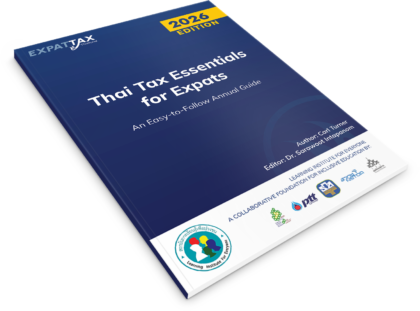
Our Thai Tax Essentials for Expats 2026 guide explains the wider Thai personal tax system, including tax residence, foreign income, remittances, deductions, Double Tax Agreements and filing requirements.
The guide is updated each year to reflect the latest rules and developments affecting expats in Thailand.


Your Filing Position May Depend on Several Factors
Whether you need to file can depend on a combination of factors, including:
- How many days you spent in Thailand
- Whether you had Thai source income
- Whether you earned foreign source income while Thai tax resident
- Whether and when that income was brought into Thailand
- Whether transfers represent income, savings or capital
- Whether you hold an LTR visa or another exemption applies
- Whether you have already paid tax overseas
- Whether your income exceeds the relevant filing threshold
- Whether you have missed a filing obligation in an earlier year
Not Sure What Applies to You?
Thai tax filing can look straightforward at first, but the answer often depends on several details working together, including where your income comes from, how long you spend in Thailand, what you remit and whether any exemptions or tax already paid overseas apply.
If you are still unsure whether you need to file, you can book a free support call with our team at Expat Tax Thailand. We have helped thousands of expats understand their Thai tax position and work out what they need to do next.
You do not need to have everything worked out before you speak to us. We are here to help you make sense of your situation, answer your initial questions and point you towards the right next step.