Thai Inheritance & Probate Services
Expert Support for Families Navigating Thai Inheritance and Probate
- Navigate Thai probate without needing to travel
- Claim Thai assets even if there’s no will
- Locate and recover Thai and international assets
- Minimise tax and transfer your inheritance securely

Deceased Asset Support
Practical Support for Claiming Thai Assets and Estates
Losing a loved one is hard and dealing with their Thai estate shouldn’t add more stress. Whether there’s a will or not, we help you recover and transfer Thai assets smoothly, legally and with full support from start to finish.
Our team works with trusted legal partners across Thailand and internationally, when needed, to manage probate, asset recovery, document preparation and tax compliance on your behalf.
With expert guidance and remote legal support, you can settle your loved one’s affairs confidently, without having to navigate the Thai legal system alone.
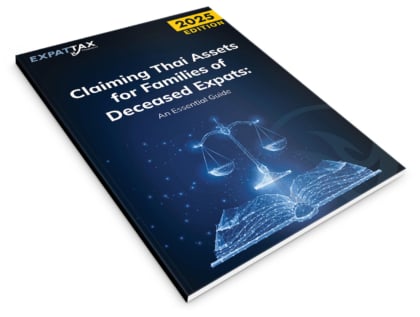
Free Download
Claiming Thai Assets for Families of Deceased Expats
A clear, practical guide to probate, tax and recovering Thai assets with confidence.

Is This Service for You
Our Thai Inheritance and Probate service is designed for families and heirs who need help recovering assets after the death of a loved one with ties to Thailand.
You’ll benefit if you:
- Are based overseas and need to claim Thai assets
- Are inheriting bank accounts, property or business interests in Thailand
- Are dealing with a Thai estate with no will
- Are unsure how to manage probate, legal documents or tax obligations
- Are concerned about frozen accounts, delays or disputes
- Need expert help with complex estates or cross-border transfers
We help you navigate the process smoothly, without needing to travel or face it alone.
Why Choose Us
We specialise in helping families recover Thai assets after a loved one’s death—quickly, legally, and with clarity at every step.


Trusted by expats
in Thailand families
Over 500 five-star reviews from clients across Thailand and overseas.


Remote probate
and asset recovery
Handle the full process without travelling or facing local bureaucracy.


Experts in inheritance
and cross-border estate
management
Navigate complex cases with confidence—wills, intestacy, crypto, business assets and more.


Clear, step-by-step
guidance
Know exactly what to expect and what to do next.


Legal and tax
compliance handled for you
Avoid delays, disputes, and double taxation with professional support.
What Your Service Covers
We manage every step of the inheritance and probate process, so you can focus on what matters most.

Thai Probate
Application
We arrange the preparation and filing of the necessary court documents on your behalf

Court Filing and
Power of Attorney Setup
Set up legal authority to manage the process without travelling

Asset Search
and Recovery
We locate and recover all Thai assets—bank accounts, real estate, business shares, and cryptocurrency—even if you’re unsure what exists

Business and Crypto
Asset Assistance
Handle complex estates, including shares, companies and digital assets

Document Preparation, Translation and Legalisation
Ensure every document is accurate, certified, and accepted by Thai authorities

Tax Guidance
and Fund Transfer Support
Minimise inheritance tax, avoid double taxation and transfer funds safely
What Our Clients Say
Frequently Asked Questions
Estate Settlement
Inheritance tax is calculated separately for each beneficiary, based on the value of assets they personally receive, not on the total value of the deceased’s estate.
Here’s how it works step by step:
Determine the market value of the assets received by each beneficiary at the time they are inherited.
Deduct any legitimate debts or liabilities linked to those assets.
Apply the 100 million baht threshold — tax only applies to the portion exceeding this amount.
Apply the appropriate rate:
5 % for direct descendants or ascendants (children, grandchildren, parents, grandparents)
10 % for all other beneficiaries
Example:
If a beneficiary receives assets worth 120 million baht after debts, the taxable portion is 20 million baht. If that person is a child of the deceased, they would pay 5 % × 20 million = 1 million baht in inheritance tax.
For more information on succession planning download our comprehensive guide.
The tax applies to a wide range of assets, particularly those located in Thailand. Common examples include:
Land and buildings (immovable property)
Securities and shares listed on the Thai Stock Exchange
Bank deposits and other financial assets that can be withdrawn or claimed
Registered vehicles and other specified assets
Any other assets later prescribed by Royal Decree
Each asset is valued based on its market price at the time the beneficiary receives it, as required by Section 15 of the Inheritance Tax Act B.E. 2558 (2015).
For land and buildings, valuation follows the official appraisal under the Land Code, adjusted for third-party rights. For listed securities, the closing market price on the date of receipt is used.
No. Under the Inheritance Tax Act B.E. 2558 (2015), a lawful spouse is fully exempt from inheritance tax in Thailand. This means that even if the inherited assets are substantial, the spouse pays no inheritance tax on their share.
However, it’s important to note that a spouse does not automatically inherit the entire estate. If there is no will, the estate is divided according to Thailand’s Civil and Commercial Code, which allocates shares between the surviving spouse and other statutory heirs such as children or parents.
To ensure your wishes are followed and your spouse is properly protected, it’s essential to have a valid Thai will in place.
Why Act Now?
- Thai assets are frozen until probate is complete
- Delays can lead to disputes or legal complications
- The process takes time—starting early means faster resolution
- Families often lose access to assets due to inaction or missing documents